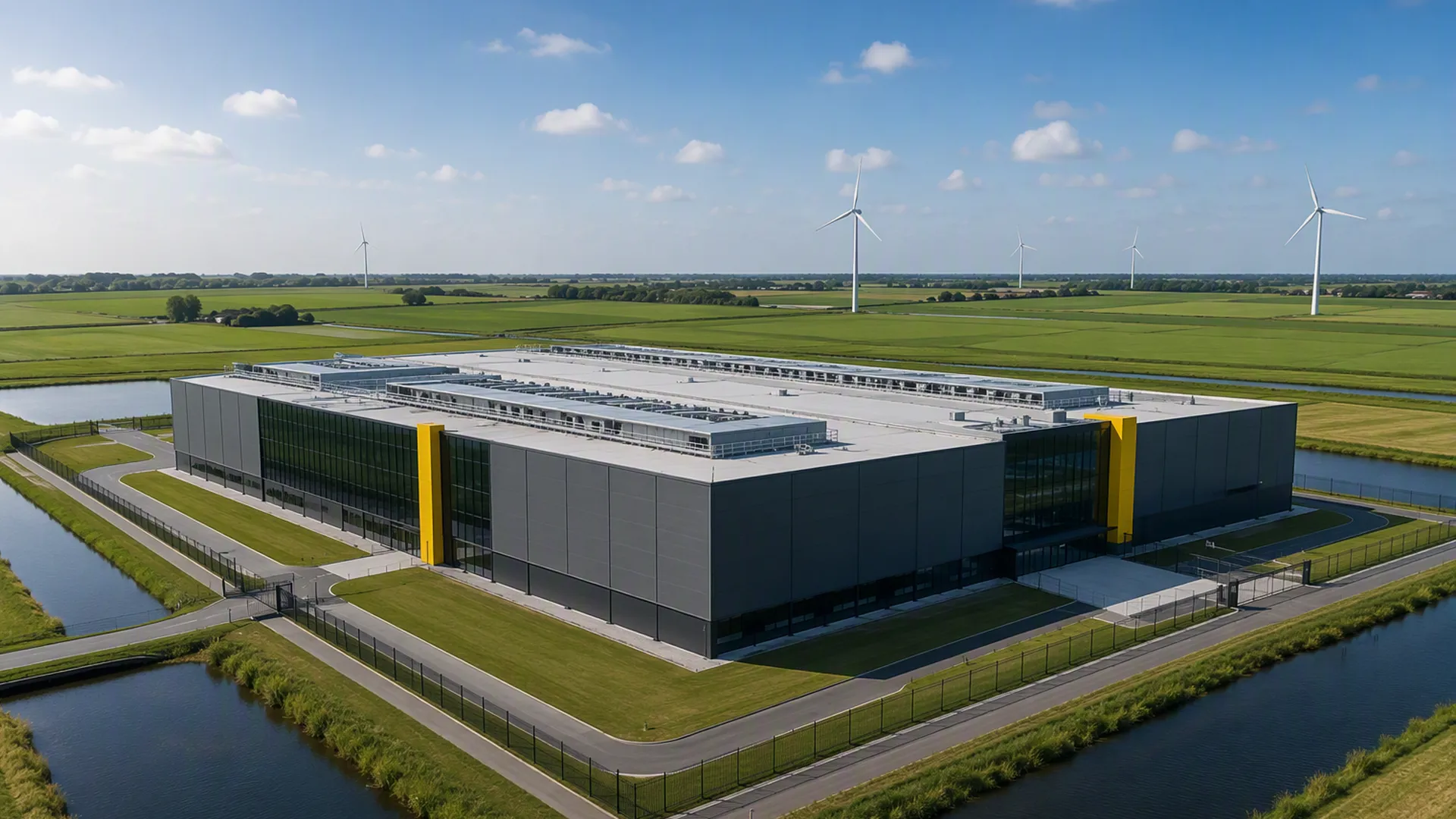
Tailored solutions for data centers, this is where Zeppelin Power makes the difference
When it comes to backup power for data centers, custom solutions are a given. The challenge lies in bringing together all technical requirements and disciplines into one reliable installation that fits the customer’s operations exactly.
That is where Zeppelin Power’s strength lies. From generator sets and fuel supply to cooling, control, monitoring, and maintenance, everything must work as one system. Together with Arie van der Horst, Account Manager for Data Centers at Zeppelin Power, we show what is involved and how Zeppelin Power makes the difference.
Tailored engineering starts with engineering
The choice for a backup power supply does not start with selecting a generator set, but with mapping the customer’s wishes and requirements. What level of availability is required? How much redundancy is desired? What growth plans does the data center have? And what requirements does the environment set in terms of noise, emissions, and available space?
“A standby power installation does not start with the generator, but with understanding the customer’s operating approach,” says Arie van der Horst. “Only once all assumptions are clear, can you determine what the installation needs to look like.”
In doing so, Zeppelin Power does not only look at the situation of today. Future expansion, ease of maintenance, and sustainability ambitions are also considered from the very first design phase.
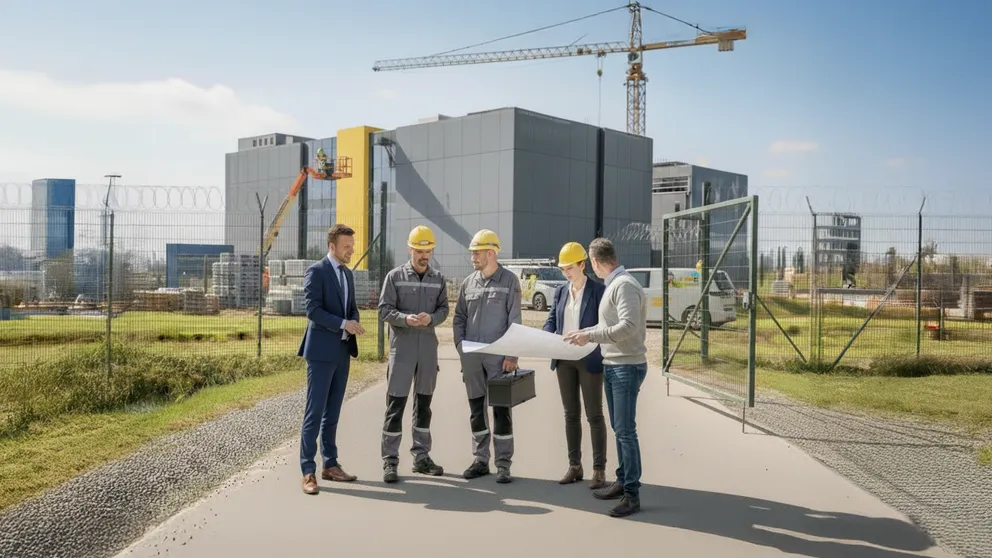
From a generator set to a complete standby power system
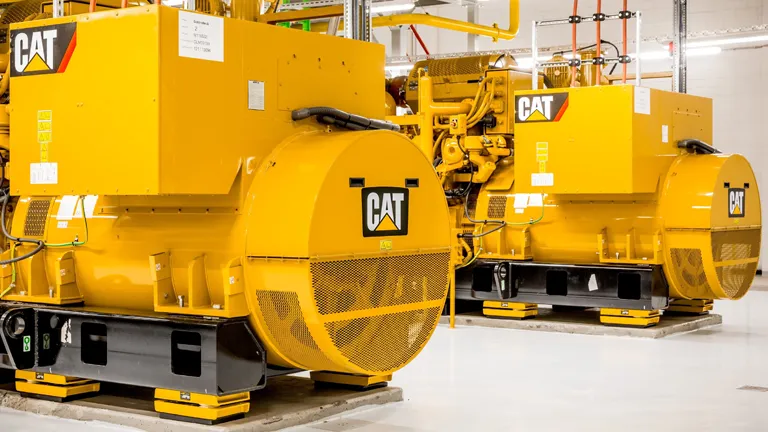
The generator forms the heart of the backup power supply, but it is only one component of the whole. The required power, the desired redundancy, and the electrical load profile (load profile/transient response) of the data center determine how many generator sets are needed and how they are configured.
That is why Zeppelin Power looks at the complete installation. Fuel supply, cooling, ventilation, exhaust systems, controls, switchgear cabinets, fire-extinguishing systems, and monitoring must be technically and functionally aligned with each other. Only then will the system as a whole operate correctly when the grid voltage fails.

"To meet the permitting requirements, extensive sound insulation was necessary. Without those measures, the installation simply would not be allowed to operate."
The environment also determines the design
1. Location and technical requirements
Not every data center is located on a remote industrial site. Sound requirements, available space, and emissions regulations vary by location. This has a direct impact on how the installation is carried out. For example, sound-insulating enclosures, extensive exhaust systems with SCR technology, sustainability targets, or a specific setup may be necessary to meet all (permit) requirements. "For a data center in an urban area, for instance, very strict noise standards applied at short distance from the installation," says Van der Horst. "To meet the permit requirements, extensive acoustic insulation was necessary. Without those provisions, the installation simply would not be allowed to operate."
2. Total solution and visual integration
"As a total partner, we take these requirements into account and make sure there is a suitable solution. Here, the customer has nothing to worry about." Visual integration is also playing an increasingly important role. Architects want to keep installations as much out of view as possible, while high exhaust systems are functionally necessary. Sometimes installations are laid out below ground level, shielded with earthworks, or placed behind special façade structures to blend better into the landscape. In this way, we do not only take account of the technical and legal requirements, but also of the environment in which the data center is being built.
3. Sustainability and alternative fuels
More and more clients are choosing alternative, sustainable fuels such as HVO. This makes it possible to further limit CO₂ emissions from test runs and backup operation. This can make an important contribution to sustainability objectives, especially in data centers where standby generator sets are tested regularly. The choice of HVO can also be incorporated into the design and execution of the installation. This means that technical requirements, permits, the environment, and sustainability ambitions are considered together from the start.
Fuel supply: reliability starts at the tank
A standby power supply system must not only work reliably today, but also be able to start directly after many years of standby operation. That is why Zeppelin Power pays close attention to the complete fuel supply. Fuel tanks, piping systems, and techniques for cleaning and conditioning the fuel, also known as fuel polishing help to keep diesel quality up to standard and ensure the installation can be used reliably for the long term.
Safety and regulations also play a major role. Fuel tanks must meet strict inspection requirements and are, among other things, equipped with leak detection and containment systems. In addition, tanks are thoroughly tested before they are put into service. Precisely because a data center must be able to rely completely on its backup power supply, every detail here also receives attention.
"We think during the design phase already about how service technicians can work safely and efficiently later on."
Maintenance is tailored work
Custom engineering does not stop at the design and construction of the backup power supply installation. Monitoring, periodic maintenance, and inspections are also tailored to the specific installation, operating conditions, and availability requirements of the data center. By continuously monitoring installations and carrying out preventive maintenance, many faults can be prevented before they affect operations.
According to Van der Horst, this custom engineering starts already during engineering. "We already consider during the design how service technicians will be able to work safely and efficiently. Are the filters easy to access? Can components be replaced easily? And how do we carry out inspections without unnecessary downtime? These are also design choices."
By building maintainability into the custom design from the start, Zeppelin Power not only increases the reliability of the installation, it also ensures that service can be performed safely and efficiently throughout the entire service life.
Custom solutions call for one party that oversees everything
With a backup power supply for a data center, a range of disciplines come together: internal combustion engines, generators, exhaust systems, fuel supply, control, monitoring, civil works and service. Custom fit means that those components are not addressed separately, but designed from the outset as one integrated system. That is where Zeppelin Power’s strength lies: we bring the different disciplines together and align them as a whole.
That is particularly important because a backup power supply system often includes components from different suppliers. For the end user, however, it must be one reliable system. That is why Zeppelin Power takes responsibility for the complete solution, from engineering and delivery to service, maintenance and warranty. This gives the customer a single point of contact for the entire installation.
How can we help?
Our specialists are ready to support you with any questions or requirements related to data center power solutions.


View the articles below as well

Zeppelin Power and datacenters: from backup power to solving grid congestion
Zeppelin Power has been providing backup power for data centers for years and now also offers temporary solutions to tackle grid…

How Zeppelin Power ensures uptime for data centers
Discover how we guarantee maximum uptime for data centers through our service, rapid response times, and spare parts inventory.

Critical start-up points: monitoring in data centers
Prevent unexpected downtime: monitor Critical Startup Points for reliable backup power in your data center with Zeppelin Power.