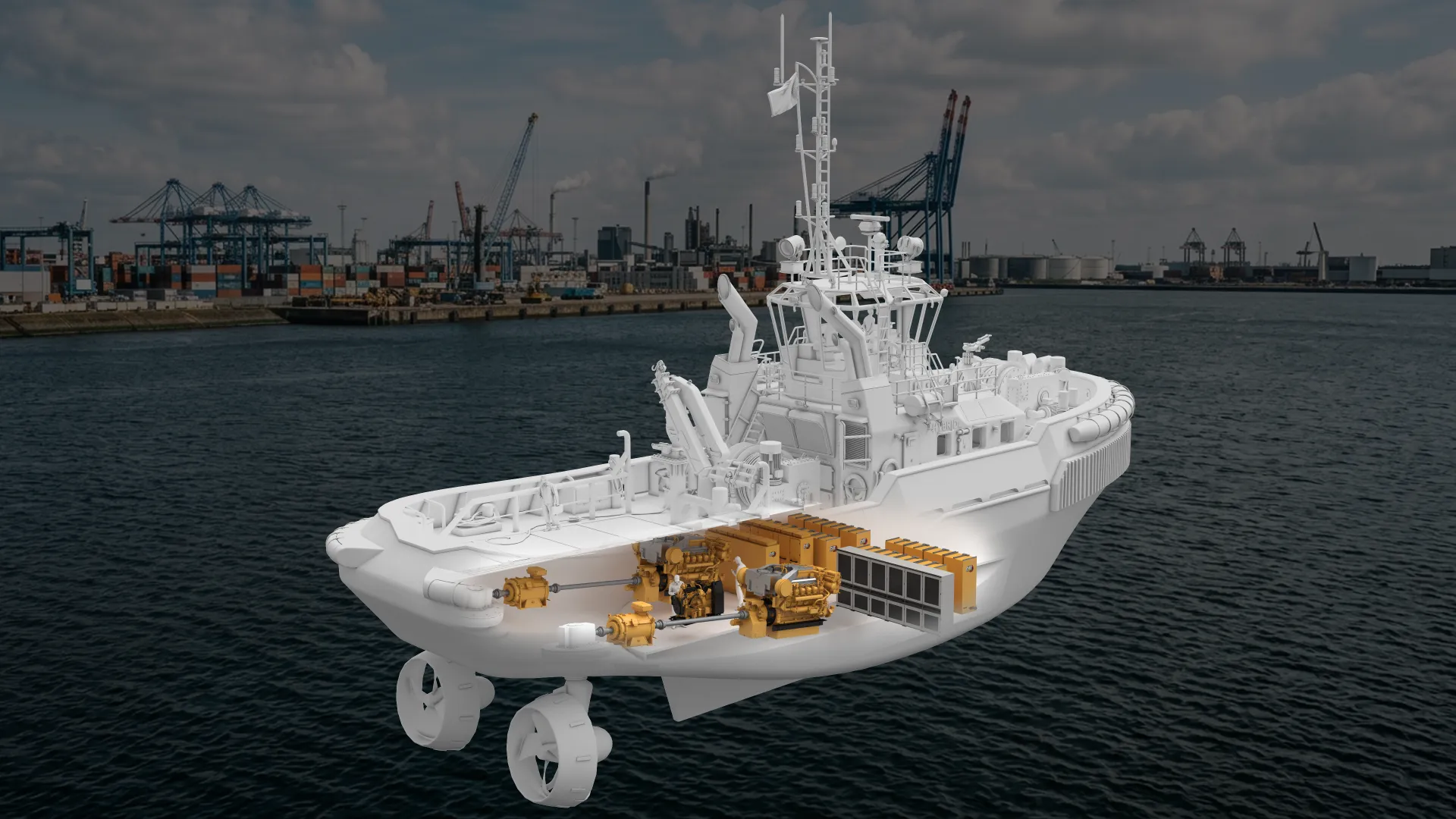
Rethinking the engine room
from engine room to energy room
When considering how to make a vessel more sustainable, electrification is an obvious option. Today, this can also be achieved using marine batteries. Yet a battery should never be the sole starting point. At Zeppelin Power, the conversation therefore starts somewhere else: what does this vessel actually need to be able to do during a working day?
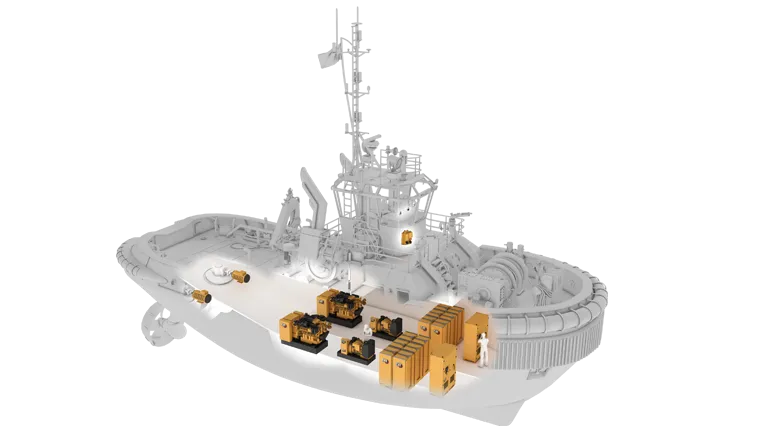
Hybrid operation start with the overall system
A battery alone does not make a hybrid vessel efficient. The real benefits emerge when propulsion, generators, energy storage, charging options and control systems are considered as one integrated system. That is why we increasingly talk not just about the engine room, but about the energy room.
This reflects the way Zeppelin Power approaches marine energy systems. First, we determine how much power a vessel needs and when. Only then do we decide which assets are required.

“The interaction between the different assets can be extremely flexible nowadays. What matters much more is how the different energy sources work together within a single system and how they fit the vessel’s intended use.”
Understanding the vessel first
The operating profile is essential. How many hours a day does the vessel operate? At what speed? How large is the difference between average and maximum power demand? How much energy do the auxiliary systems, pumps, cranes or other consumers require? How much space is available? Are there short power peaks? How long does the vessel remain alongside, and how much charging capacity is available there?
A vessel requiring high power continuously for several hours needs a different solution from a workboat that spends much of its time stationary, manoeuvres at low speed and only occasionally requires maximum power. A ferry operating a fixed, short route has different requirements again.
Only when the operating profile is clear can you properly determine the required size of the engines, generator sets and battery.
Size the system for its actual use, not just peak demand
That is why “How large should my battery be?” is not the right question to ask first. For one vessel, being able to operate electrically for several hours may be important. For another, the priority may be delivering a large amount of power for a short period.
Ultimately, the operating profile and daily use determine what is required from the battery and how it should be used within the overall energy system.
Bjorn Hoefnagels, Manager Clean Marine at Zeppelin Power, gives an example:
“Take a hypothetical workboat that requires around 250 kW during normal operation but approaches 800 kW during short manoeuvres or heavy-duty operations. Traditionally, generator sets are sized for this maximum power demand. As a result, a large proportion of the installed capacity is only used to a limited extent during normal operations.”
“A battery creates another possibility. Generator sets can operate closer to a favourable load range, while the battery handles short power peaks before being recharged. We call this peak shaving. For a vessel like this, briefly supplying a high level of power may be more important than operating fully electrically for extended periods.”
For a system like this to work effectively in practice, the different energy systems need to be continuously coordinated. This is where Cat Supervisory Control comes in. Based on the current power demand, the system determines how Cat generator sets, the marine battery system and any other energy systems work together. We explain this in more detail later in this article.
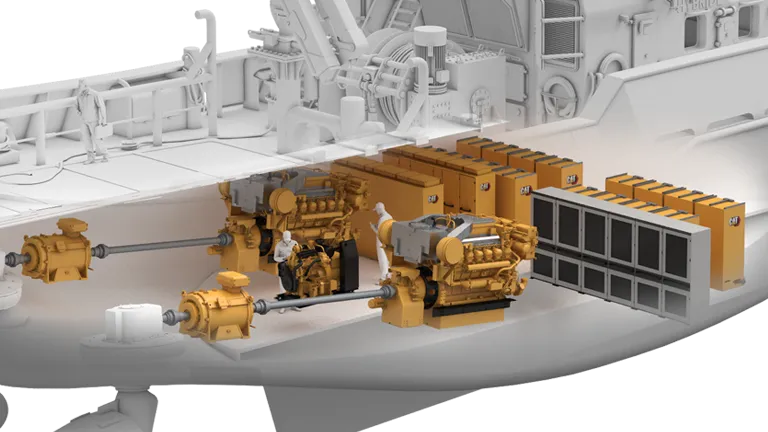
From individual components to a single energy system
The traditional engine room is changing. For a long time, the combustion engine was the obvious heart of the vessel’s power system. Today, it is increasingly being complemented by other energy systems, such as generator sets, batteries and shore power installations.
As a result, the modern engine room is becoming less focused on a single dominant power source. Instead, the challenge is to determine how all these components can work together to deliver the required power as efficiently as possible.
Hoefnagels: “The interaction between the different assets can be extremely flexible nowadays. What matters much more is how the different energy sources work together within a single system and how they fit the vessel’s intended use. A battery, generator set, main engine and shore power connection each have their own role. The way those roles are divided does not have to be exactly the same in every operating situation.”
Cat Supervisory Control: which source supplies power and when?
The Battery Management System monitors the battery itself, including temperature, state of charge and cell balancing. Cat Supervisory Control operates one level higher by managing the overall energy system.
The system determines how the available energy sources work together. When power demand is low, electrical energy can be prioritised. When demand increases, the combustion engine and battery can supply power together. Starting and stopping generator sets can also form part of this strategy. This provides a high degree of flexibility.
Hoefnagels: “This makes the software just as important as the hardware. A well-designed hybrid system is not only about which components are installed on board, but above all about how and when they are used.”
What are the benefits?
A well-designed energy room can deliver several benefits at once. Hoefnagels: “A battery can provide peak power, meaning additional engine or generator capacity does not have to run continuously. Generator sets can operate more often within a favourable load range and can even be switched off completely during certain operating phases. This saves fuel, operating hours and maintenance. Electrical operation can also reduce local noise and exhaust emissions.”
“But the extent of these benefits depends entirely on the operating profile and the chosen system architecture. An incorrectly sized battery may function perfectly well from a technical perspective while delivering little economic benefit. That is why we look not only at how much power needs to be installed, but primarily at how often and for how long each energy source will actually be used.”

Zeppelin Power as your system partner
The addition of the marine battery system provides an important new building block within Zeppelin Power’s overall offering. But because our expertise also covers engines, generator sets, electrical systems and control technology, we can look beyond the battery alone.
For a vessel owner, shipping company, superintendent or naval architect, a discussion about making operations more sustainable therefore does not have to begin by choosing a specific component. It starts with the vessel, its operation and the resulting power demand.
From there, we determine which combination of technologies best fits those requirements.
The engine room, or energy room, of the future is therefore increasingly less about which engine is installed. Instead, it is about which energy source delivers the required power at any given moment and how all those sources work together.


Want to read more?

Alcohol as fuel
In this article, we outline alcohol fuels that can be used in engines, along with their pros and cons.

Cat engine De Hein exceeds the 100,000 operating hours limit
Van der Kamp has been a Zeppelin Power customer since 2000. In 2005, we installed Caterpillar engines on De Hein. In 2022, the 3406…

The major differences between FAME and HVO
There are significant differences between FAME and HVO, the two main biofuels, and how they can be used in engines.

Is methanol the alternative to diesel oil in shipping?
In 2018, 173 IMO countries agreed to cut CO2 emissions from shipping 50% by 2050, focusing on alternative fuels like methanol.

Is shore power the energy solution for ports?
How does shore power work, why is it so important, and what does the future of this more sustainable energy supply look like?

Mega maintenance project under great time pressure
Zeppelin Power completed major maintenance under high pressure on Wagenborg Offshore’s Walk to Work vessel Koeningsborg.

ULEV notation
Strict environmental standards such as Tier and Stage V apply in shipping. Zeppelin Power goes even further with the ULEV notation.

Sailing on methanol
Technology for sailing on methanol is under development, and ships need to be adapted. Read more about it in this article.

Shore power makes ports more sustainable
With grid congestion and growing demand for sustainable energy, integrating various energy sources and consumers is crucial.

Caterpillar marine battery
Cat Marine Battery System cuts emissions, delivers top performance, and offers a modular design for sustainable use.