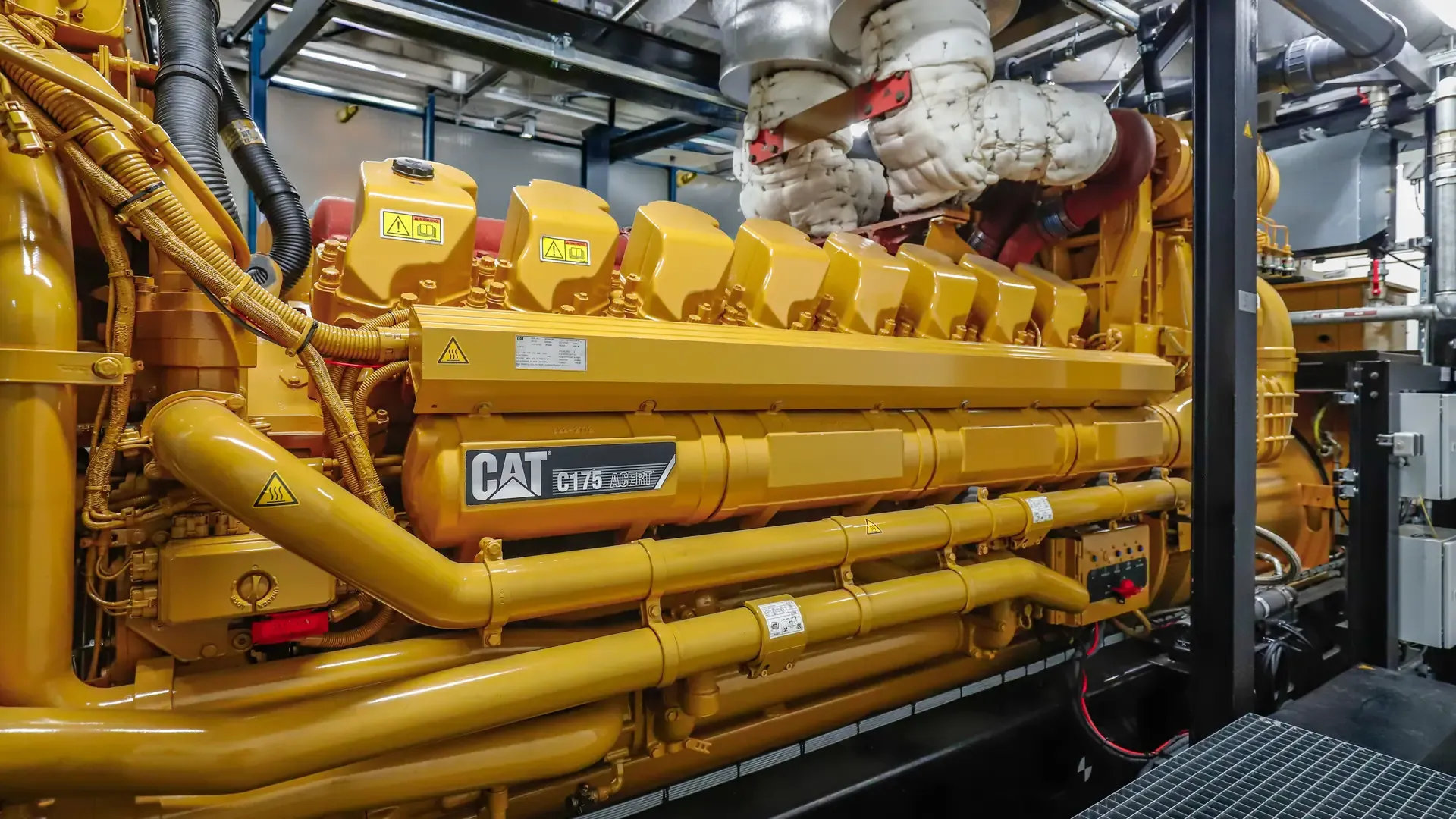
The development of the CHP at Zeppelin Power
Combined heat and power, also known as CHP, is today seen as an efficient and relatively sustainable way to generate energy. But long before the energy transition became a daily topic, Zeppelin Power’s predecessor already played an important role in the development of this technology in the Netherlands.
The beginning
What began with pioneering Total Energy installations in the 1960s grew into an important energy solution for, among others, swimming pools, hospitals, industry, and ultimately greenhouse horticulture. By smartly combining electricity, heat, and later even CO2, CHP proved for many years to be one of the most efficient ways to generate and use energy locally.
The first steps toward more efficient energy
The foundation of a CHP is simple: with one engine generating both electricity and heat at the same time. Where in traditional power plants a lot of heat is lost, in a CHP that heat is put to good use instead. As a result, the total efficiency is significantly higher than with separate generation of electricity and heat.
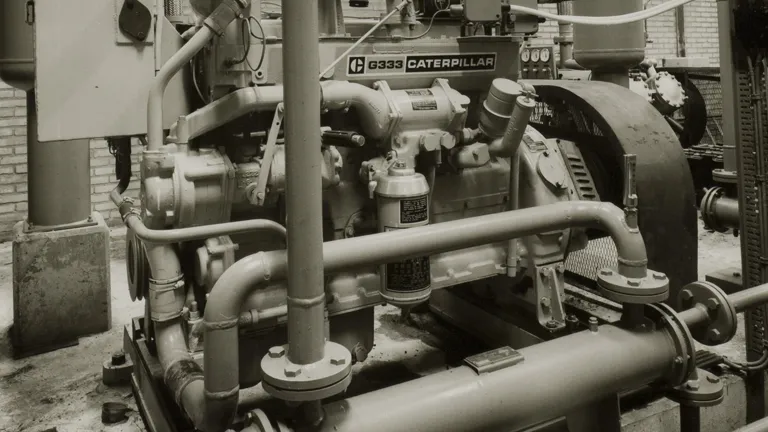
Back in the 1960s, Geveke Motoren, one of the predecessors of Zeppelin Power, saw opportunities for this technology. A major breakthrough followed in 1967 at the new ice stadium Thialf in Heerenveen.
There, an installation was built that ran entirely on gas engines from Caterpillar, without being connected to the electricity grid. The installation supplied electricity for the complex and used the recovered heat for heating, among other things, the ice rink and ancillary buildings. For that time, this was particularly innovative.
The driving factor was practical: high costs for grid connections and peak capacity made local power generation attractive. At the same time, the Netherlands had relatively affordable natural gas thanks to the Groningen gas field. This created an environment in which CHP could develop quickly.

From a pioneering project to widespread application
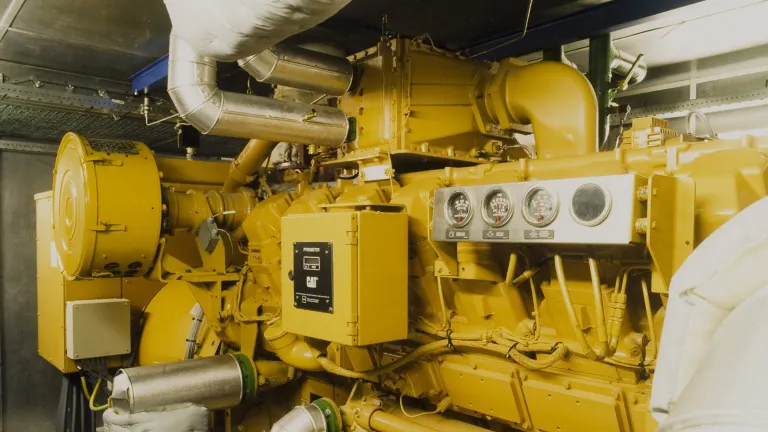
After Thialf, more and more applications followed. Swimming pools, hospitals, dairy plants, and wastewater treatment facilities discovered the benefits of local power generation with CHP installations.
It was precisely the combination of reliability, efficiency, and lower energy costs that made the technology attractive. At the same time, the technology of that period also required trust. Operating fully independent of the electricity grid was far from straightforward at the time.
That is why the organization developed not only the technology itself, but also the service and support around it. The certainty of the power supply became at least as important as the installation itself. By organizing service, maintenance, and support intelligently, confidence in CHP solutions grew.
This combination of technology and service enabled CHP to spread further throughout the Netherlands.
Greenhouse horticulture as a driver for CHP
The real breakthrough of CHP came in the 1970s in greenhouse horticulture. There, the technology proved to fit perfectly with day-to-day practice. Glasshouses have a constant demand for heat, electricity and later also CO2 for plant growth. That is exactly why a CHP installation could operate with extremely high efficiency, often for thousands of hours per year.
What started with relatively small installations grew into large-scale applications within the sector. Thanks to the combination of heat production, electricity generation, and CO2 utilization, CHP changed how many greenhouse horticulture businesses handled energy. ”
That technology also gained an important sustainable character. The available energy from fuel was used far more efficiently than in traditional systems, while residual streams were put back to smart use.
Innovation together with Caterpillar and partners
The development of CHP in the Netherlands was not just a technical story, but also a story of collaboration. Together with Caterpillar, the engines were continuously adapted further for specific applications in the Dutch market. Diesel engines were converted into gas engines and adapted for low gas pressures in greenhouse horticulture. In addition, work continued around further optimization of efficiency, emissions, and reliability.
Collaboration with other Dutch companies also played an important role. From installation construction to enclosures and the integration of complete energy systems, the strength was in the overall solution. Through this joint development, the Netherlands grew into one of the leading countries in the field of CHP.
A technology that is still relevant
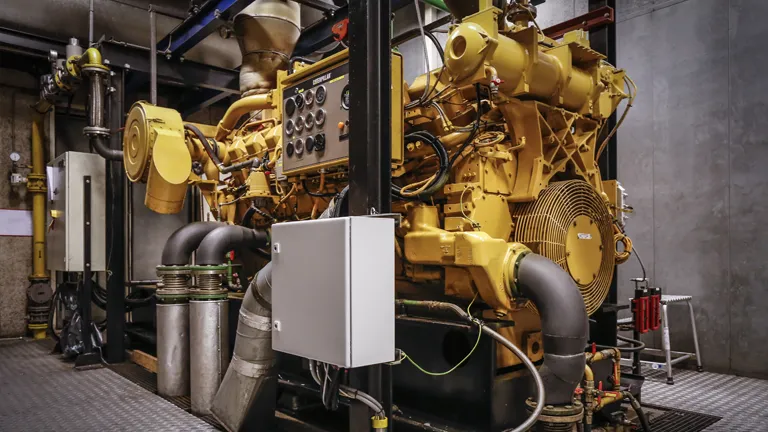
Although the energy industry is changing significantly today due to batteries, electrification, and renewable energy sources, the idea behind CHP remains strikingly relevant: use available energy as efficiently as possible.
Especially in sectors where there is a continuous need for heat and electricity, CHP continues to be a smart solution. This is particularly true when systems are combined with modern energy technologies, smart software, and more sustainable fuels.
That means CHP is not only an important chapter in Zeppelin Power’s history, but also a foundation for the energy solutions of today and tomorrow.


Want to read more about our solutions?

Cat engine De Hein exceeds the 100,000 operating hours limit
Van der Kamp has been a Zeppelin Power customer since 2000. In 2005, we installed Caterpillar engines on De Hein. In 2022, the 3406…

More sustainable orchids at satter orchids
A solar field of over 5,500 solar panels ensures more sustainable orchids.

Energy transition in greenhouse horticulture
We installed 1,250 solar panels at Sweet Lions. The challenge was integrating panels and CHP into a single, unified grid connection.

Gas generators as a temporary solution to combat grid congestion
The province of Utrecht, in collaboration with Tennet and Stedin, has decided to deploy gas generators.

Local energy generation: the answer to grid congestion
Local energy generation has a future, as it reduces the strain on the electricity grid and prevents grid congestion.

Mega maintenance project under great time pressure
Zeppelin Power completed major maintenance under high pressure on Wagenborg Offshore’s Walk to Work vessel Koeningsborg.

Plant nursery opts for Zeppelin Cat PV solar system
At Plant Nursery P. van Geest, Zeppelin Power installed a Cat PV solar system with nearly 1,000 Caterpillar solar panels.

Future-proof CHP systems
Caterpillar offers gas generator sets that can blend up to 25% hydrogen. For CHP systems, this is a future-proof option.

Are smart grids and microgrids the solution?
The energy transition is replacing fossil fuels with solar and wind, but challenges arise, like an electricity grid struggling with…

Solar panels help Porsche Amsterdam
Over 238 solar panels make the workshop self-sufficient—green, sustainable, economically attractive, and necessary due to grid…