Pon Center Autoschade Amersfoort
How battery storage makes grid congestion manageable
Grid congestion is no longer an abstract concept for many companies, but a daily reality. At Pon Center Autoschade Amersfoort, it became clear how decisive the availability of electricity is for day-to-day operations. Batteries do not solve the problem completely, but they do make it manageable. The difference between downtime and uninterrupted operation.
ambitious company, limited by the grid
Pon Center Autoschade Amersfoort is a dealer-related damage repair company with sixty employees, of which fifty work on the shop floor. In a modern new-build premises, various activities have been brought together, from spacious workshops and spray booths to a digital damage assessment studio and facilities for electric and hybrid vehicles. The building was designed with sustainability, comfort and safety as its starting point, and received a DuurzaamheidsAward from AkzoNobel for this. On top of that, the company also received this year the prestigious certificate 'Erkend Duurzaam Premium', awarded by the Institute for Sustainable Mobility (IvDM).
Just that modern business operations brought a challenge with it. Due to grid congestion, the company can only draw about 49 kW from the electricity grid after 4:00 pm, until 8:00 pm. For a vehicle repair and damage restoration company that is operational all day, this is a serious limitation.
“This is not a theoretical problem,” says Dennis Bronkhorst, branch manager at Pon Center Autoschade Amersfoort. “You notice it immediately in your planning and turnaround times. Especially with installations such as hybrid spray booths, heat pump installations, and charging facilities for vehicles.”
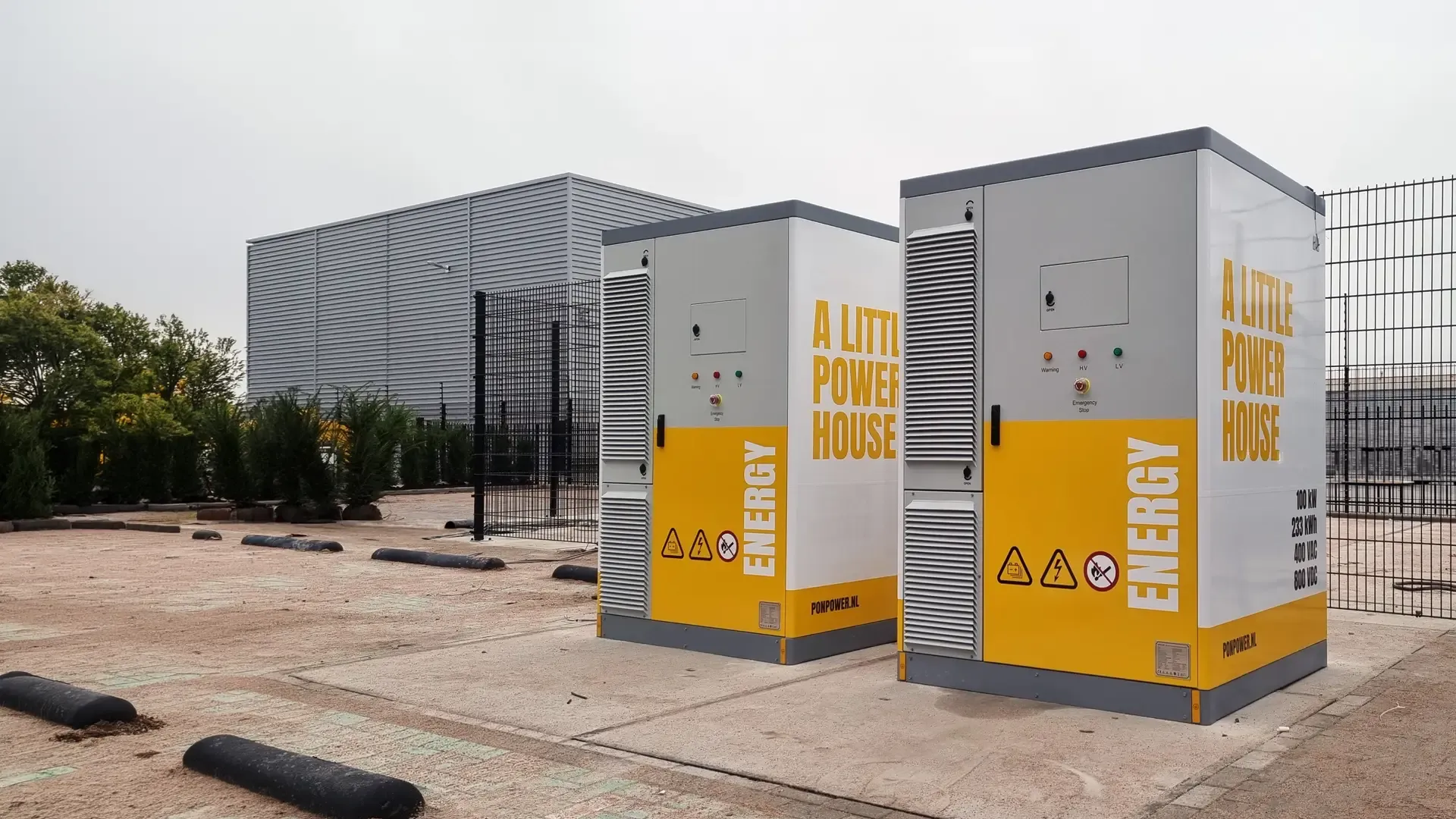
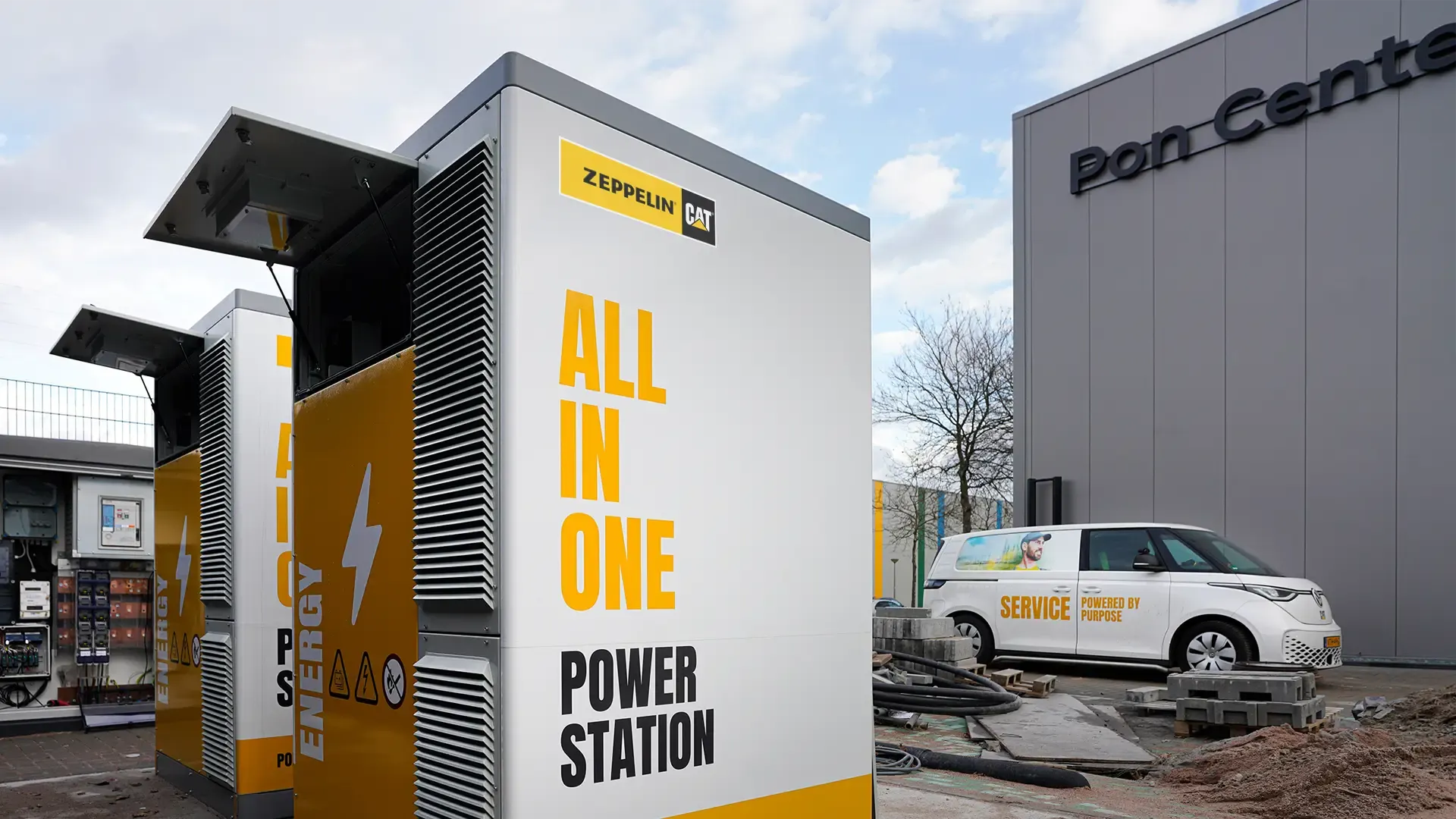
To address this limitation, Zeppelin Power installed two battery systems. The batteries were initially used purely to bridge the period after 4:00 pm, so that operations could continue within the constraints of the grid connection.

"It is not a theoretical problem, you notice it immediately in your planning and lead times. Especially with installations such as spray booths and charging facilities for vehicles."
Learning from real-world experience
The initial concept was relatively straightforward: the batteries were charged before 4:00 pm and then delivered power when the grid restriction came into effect.
However, once the premises were fully operational, it turned out that real-world practice was more complex. The actual energy consumption differed from the assumptions made in advance. In addition, it became clear that part of the locally generated solar energy was not being used optimally. Pon Center Autoschade has 765 solar panels, but due to grid congestion it is not allowed to export power back to the electricity grid.
This led to an optimization phase. By deploying the batteries more actively during the day as well, more self-generated energy could be stored and used later. At the same time, we looked at how the energy management system could be better aligned with the premises' actual energy use.
Sometimes that meant, almost literally, getting your boots on the ground. Dennis: “Zeppelin Power employees worked alongside us in the work areas, analyzed the energy use, and reached out to installation suppliers to improve coordination,” Dennis explains. “The goal was to gain better insight into our consumption and to make smarter use of the available energy.”
As a result, the project grew into a process of measuring, analyzing, and adjusting. An approach that shows how important a good energy assessment is, but also how challenging it can be for a completely new company building with new installations and a still unknown usage profile.
“You then see how important involvement is,” says Dennis. “People really actively collaborated with us, adjusted, and refined things based on what happened here in practice. We didn’t just dwell on how it could initially have been done better, but rolled up our sleeves.”
Optimizing further together
With the knowledge we have now, additional battery capacity would have delivered more flexibility. At the same time, this is a trade-off that comes up in every new build project. Investments must not only be technically logical, but also economically sound.
The project at Pon Center Autoschade Amersfoort shows that batteries do not necessarily eliminate grid congestion, but they can make it workable. At the same time, it underlines how important insight into energy consumption is. Because once a new building is actually put into use, practice often turns out to be just a little different from the calculations in advance.
"Real thought was put into it, adjustments were made, and it was refined based on what happened in practice here."
The energy solution at Pon Center Autoschade Amersfoort consists of:
How the batteries fill the gap between the normally available power and the power available during time-related grid congestion
The batteries form a flexible addition to the existing grid connection. During quiet hours, they are charged, as much as possible with locally generated solar energy. During the day, they can help absorb peaks. After 4:00 pm, they deliver power, so that total consumption remains within the limits of the grid connection.
“Of course, this is a special situation, where there is only a power limitation between 4:00 PM and 8:00 PM. That is why we can solve it with batteries only and the energy from the solar panels”, explains David Kuipers, account manager Energy Solutions at Zeppelin Power. "In the case of a continuous limitation, we could add a gas or diesel generator to bridge periods with little or no sun."
Currently, Zeppelin Power is still working on an adjustment in which the Grid Energy Optimizer can allow or block the electricity consumption of the spray booths based on the available capacity. The goal is to have these booths operate electrically as much as possible, and not on gas. Optimizing the situation at Pon Center Autoschade Amersfoort is therefore still ongoing.
Can we help you?
Our advisor is ready to help you with your questions and requests regarding battery energy solutions.

Also view the articles below

Koepon chooses a backup generator for reliability and animal welfare
Animal welfare at the heart of Koepon: 400 cows, 6 milking robots, and uninterrupted access thanks to a Caterpillar backup generator.

Zeppelin Power and datacenters: from backup power to solving grid congestion
Zeppelin Power has been providing backup power for data centers for years and now also offers temporary solutions to tackle grid…

Zeppelin Power batteries help advance the energy transition
In case of grid congestion or an excess of sustainable energy, our batteries from Zeppelin Power provide the solution.

The smart algorithms of Zeppelin Power
Smart algorithms from Zeppelin Power's software engineers are central to efficient energy use.

Energy transition in greenhouse horticulture
We installed 1,250 solar panels at Sweet Lions. The challenge was integrating panels and CHP into a single, unified grid connection.

Gas generators as a temporary solution to combat grid congestion
The province of Utrecht, in collaboration with Tennet and Stedin, has decided to deploy gas generators.

Is shore power the energy solution for ports?
How does shore power work, why is it so important, and what does the future of this more sustainable energy supply look like?

Local energy generation: the answer to grid congestion
Local energy generation has a future, as it reduces the strain on the electricity grid and prevents grid congestion.

Shore power makes ports more sustainable
With grid congestion and growing demand for sustainable energy, integrating various energy sources and consumers is crucial.

Are smart grids and microgrids the solution?
The energy transition is replacing fossil fuels with solar and wind, but challenges arise, like an electricity grid struggling with…